Buying a waterfront home in Davidson can feel exciting and complicated at the same time. You are not just buying square footage and finishes. You are also evaluating shoreline rules, flood risk, insurance costs, and how you plan to use the property day to day. This roadmap will help you understand what to review before you make an offer, what to investigate during due diligence, and how to move toward closing with more confidence. Let’s dive in.
Why Davidson waterfront buying is different
Davidson sits within the Lake Norman region, where lake living shapes the home search in a very real way. Lake Norman spans 34 miles with 520 miles of shoreline, and Davidson offers direct access to that lifestyle, including places like Lake Davidson Nature Preserve.
That matters because a waterfront purchase is not the same as buying a typical suburban home. The lot, the shoreline, and any structures near the water can affect ownership costs, future improvements, and even financing and insurance decisions. In other words, you need to evaluate the full property, not just the house itself.
Start with preapproval and payment clarity
Before you tour seriously, get preapproved. The Consumer Financial Protection Bureau says preapproval helps you understand your budget, and it does not lock you into one lender.
You should also compare official Loan Estimates from multiple lenders before choosing a loan. That document gives you an early look at origination charges, third-party fees, taxes, insurance, and estimated cash to close. For a waterfront purchase, that insurance line deserves extra attention.
A key point for lakefront buyers is that standard homeowner’s insurance typically does not cover flood damage. FEMA notes that flood insurance may be required for properties in high-risk mapped zones, and some policies can involve a waiting period before coverage begins. Reviewing this early can help you avoid last-minute surprises.
Tour waterfront homes with a wider lens
When you walk a Davidson waterfront property, it helps to think like both a buyer and an investigator. Beautiful views are important, but they should not distract you from the physical and legal details that come with lakefront ownership.
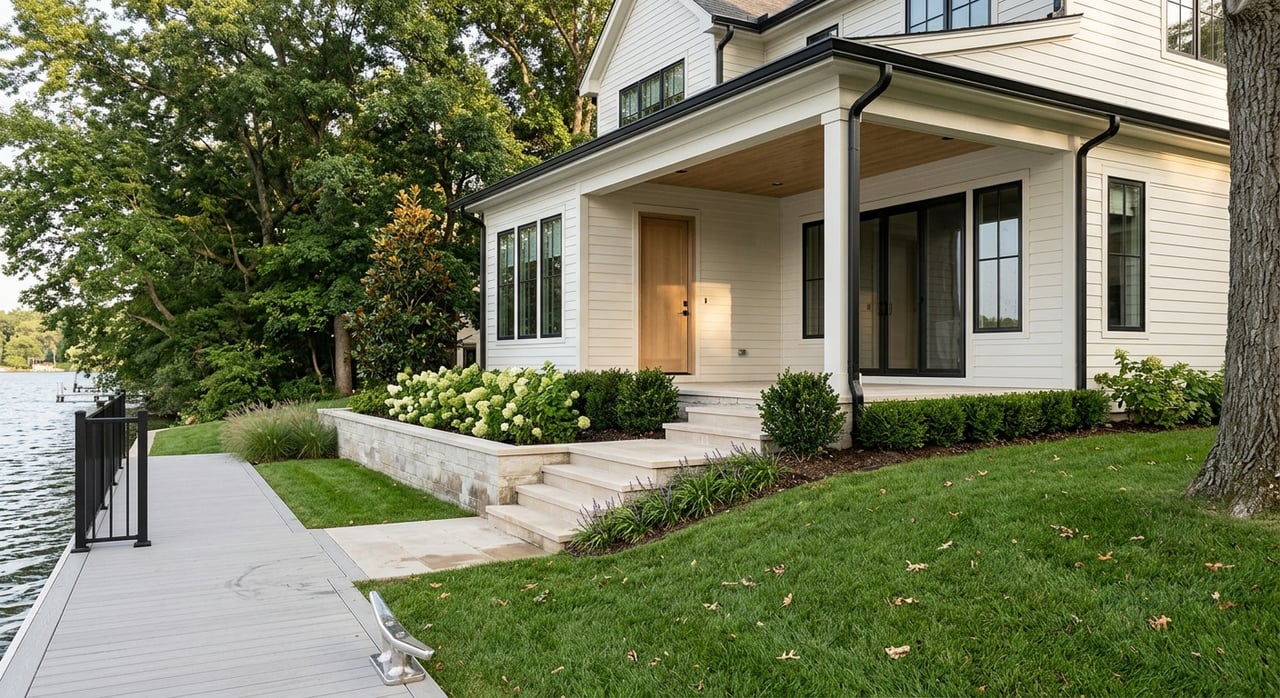
During a showing, pay close attention to the lot layout, shoreline condition, water access, and visible improvements near the lake. If you see a dock, pier, retaining wall, or shoreline stabilization work, those features should become part of your due diligence questions.
What to notice during a tour
- The slope and usability of the lot
- The condition of the shoreline and any retaining structures
- The presence of a dock, pier, or boat-related improvements
- Any low-lying areas that may raise flood questions
- Access paths, stairs, and how the home connects to the water
- Any signs of additions or site work that may need permit verification
A waterfront showing should function like a property review, not just a style tour. The home may be stunning, but your long-term experience will also depend on what the site allows, what it requires, and what it may cost to maintain.
Build an offer with protection
Once you find the right home, speed can matter, but so does structure. The CFPB recommends considering contingencies for financing and satisfactory inspections when appropriate, especially when you need time to verify major property details.
In North Carolina, the due diligence period is a negotiated window for investigation. According to the North Carolina Real Estate Commission’s explanation of Form 2-T, buyers commonly use this period for inspections, survey work, appraisal, title review, loan qualification, and repair negotiations.
You can typically terminate during due diligence by written notice and recover your earnest money, though the due diligence fee is usually not refunded unless the contract says otherwise. Because the fee and timeline are negotiable, your offer should leave enough room to confirm the issues that matter most with a waterfront property.
Expand your due diligence checklist
For a Davidson waterfront home, your due diligence should go beyond a basic home inspection. You are verifying not only condition, but also insurability, permitted use, and the status of any shoreline-related features.
Core due diligence items
- Home inspection
- Pest inspection
- Survey
- Appraisal
- Title search
- Loan application and final loan qualification
Waterfront-specific due diligence items
- Check FEMA flood maps through the Flood Map Service Center to see whether the property is in a flood zone
- Request flood insurance guidance or quotes early if the property may fall in a Special Flood Hazard Area
- Verify whether any dock, pier, seawall, or shoreline stabilization work was permitted and what future work may require Duke Energy Lake Services approval
- Confirm whether the home uses septic or a private well and review status with Mecklenburg County Environmental Health
- Check whether additions, remodels, or site work were reviewed through Mecklenburg County Code Enforcement
This is where many buyers protect themselves from expensive surprises. A great view does not answer flood questions, permit questions, or septic questions, so it is worth treating each of those as part of the purchase decision.
Understand flood risk before you commit
Flood risk is one of the most important pieces of a waterfront transaction. FEMA’s official flood map portal is the public source for flood hazard information, and it can help you understand whether a property falls in a mapped high-risk area.
If the home is in a Special Flood Hazard Area, federally regulated or backed lenders generally require flood insurance. Even if flood insurance is not required, you may still want to understand the potential cost and coverage options before your due diligence period ends.
This step matters for both budget and peace of mind. Your monthly payment, cash to close, and long-term ownership costs may look different once flood insurance enters the picture.
Review shoreline permits and lake improvements
A dock or improved shoreline can add to the appeal of a waterfront property, but those features should never be assumed to be fully approved. Duke Energy advises lake property owners to contact Lake Services before building a dock or pier or stabilizing a shoreline.
That means you should confirm what exists, whether it was permitted, and what limits may apply to future changes. If your vision includes upgrading the shoreline, adding structures, or improving lake access, those questions should be answered before due diligence expires.
Check septic, well, and local permits
Some waterfront homes involve infrastructure questions that are less common in standard neighborhood purchases. If the property uses a septic system or private well, you should confirm inspection and permitting status with Mecklenburg County Environmental Health.
It is also wise to verify whether any additions, renovations, or site work were reviewed through Mecklenburg County Code Enforcement. This can help you understand whether prior work was properly permitted and whether any unresolved issues could affect your ownership.
Prepare for a document-heavy closing
After your offer is accepted and your loan is underway, the process shifts from investigation to execution. The CFPB says buyers should expect lender requests for more documents, along with coordination around inspection results, homeowner’s insurance, and title insurance.
One of the most important closing steps is reviewing the Closing Disclosure. The CFPB notes that you must receive it at least three business days before closing, and you should compare it against your Loan Estimate to catch any unexpected changes.
It also helps to contact your lender or closing agent at least a week before closing to confirm timing and delivery. In a waterfront transaction, where financing, insurance, title, and property details all intersect, staying proactive can keep the final stretch smoother.
Why guidance matters in a waterfront purchase
A Davidson waterfront purchase often involves more moving parts than a typical home search. You may be coordinating lender timelines, flood map reviews, insurance quotes, permit research, inspections, and shoreline questions all at once.
That is why strong representation matters. You want an advisor who understands that lakefront buying is both a lifestyle decision and a technical one, and who can help you keep the process organized from your first tour to the closing table.
If you are planning to buy a waterfront home in Davidson, working with Scott Parker gives you a local resource who understands Lake Norman living and the details that can shape a confident purchase.
FAQs
What makes a Davidson waterfront home different from a typical home purchase?
- A Davidson waterfront home involves the house, lot, shoreline, flood risk, insurance considerations, and possible permit or septic questions, so the review process is broader than a standard home purchase.
What should you do before touring Davidson waterfront homes?
- You should get preapproved, compare Loan Estimates from lenders, and understand that flood insurance or other waterfront-related costs may affect your budget.
How do you check flood risk for a Davidson waterfront property?
- You can review the property through FEMA’s official Flood Map Service Center to see whether it is in a mapped flood zone and whether flood insurance may be required.
Why do dock and shoreline permits matter for Davidson waterfront buyers?
- Docks, piers, and shoreline improvements may require approval, and verifying permit status helps you understand current compliance and what future work may be allowed.
What should you verify if a Davidson waterfront home has septic or a private well?
- You should confirm inspection and permitting status with Mecklenburg County Environmental Health so you understand the condition and regulatory status of those systems.
What happens during the North Carolina due diligence period on a waterfront home?
- The due diligence period gives you time to investigate inspections, survey, appraisal, title, financing, flood issues, insurance, and permit-related concerns before moving forward with the purchase.